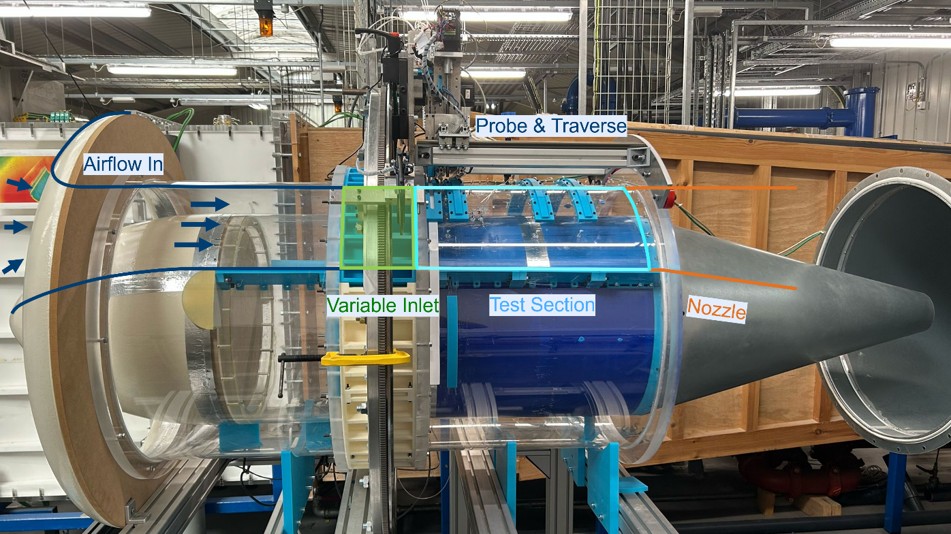
How can surface heat exchanger designs be experimentally validated under realistic outlet-guide-vane installation flow conditions, at low cost and fast turnaround?
CFD and low-order models are only as trustworthy as their experimental validation. The existing facility was not configured to replicate the outlet-guide-vane installation flow these heat exchangers actually operate in — whether in the bypass duct or the exhaust gas path — so without major modification, every design would remain unproven.
- Led major modifications to an existing low-speed annular wind tunnel facility, redesigning it to replicate the outlet-guide-vane installation flow of modern jet engines
- Designed a unique modular test-bed enabling rapid swapping of heat exchanger geometries
- Recommissioned the modified facility, delivering the work well under budget
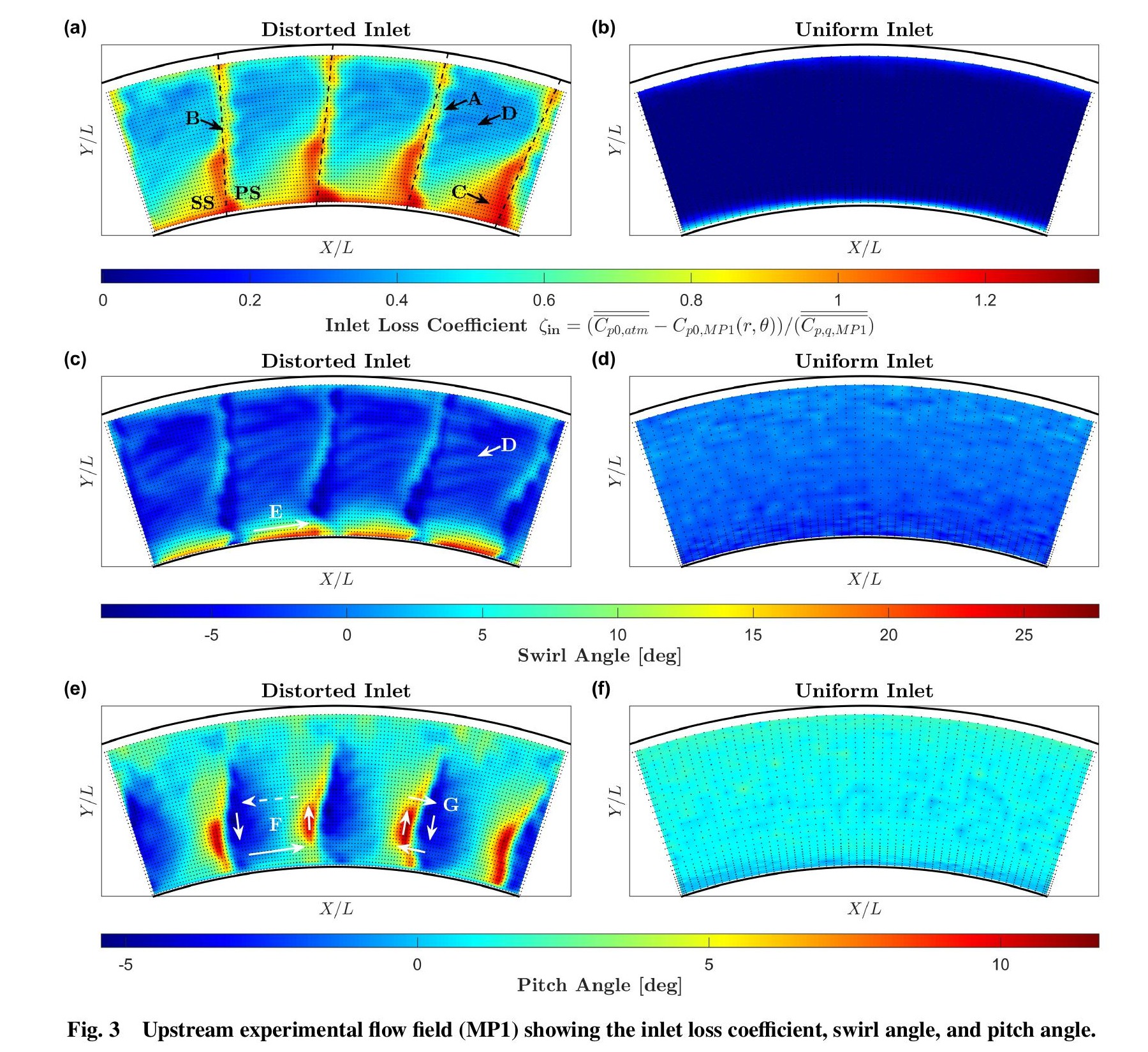
Following the modifications, the facility became the world's only low-speed annular wind tunnel replicating the outlet-guide-vane installation flow these heat exchangers operate in, delivered well under budget. Its modular test-bed design drastically reduces the experimental turnaround time for testing any surface heat exchanger design.
This facility underpins the experimental validation dataset for the wider DPhil research programme, and continues to be used to test and characterise new heat exchanger geometries as they're developed.