Given a real component's failure literature and applicable design standards, can a structured method — identifying failure mechanisms, then scoring candidate materials against a weighted specification — reliably justify a material choice? Two case studies, one low-stakes and one safety-critical, put the same method to the test.
It's easy to underestimate a component like a coin or a lamp post because they're unglamorous and everyday. But a lighting column standing beside a road is genuinely safety-critical infrastructure: British Standard BS EN 12767 requires lighting columns to survive vehicle impacts at 50, 70, and 100 km/h without becoming a secondary hazard to the occupants. Getting the material and fatigue-life analysis right isn't academic — it's the difference between a column that fails safely and one that doesn't. Being able to turn published failure-mechanism research and formal standards into a defensible material decision, quickly and rigorously, is a core reliability-engineering skill — whether the component is a coin or a piece of critical infrastructure.
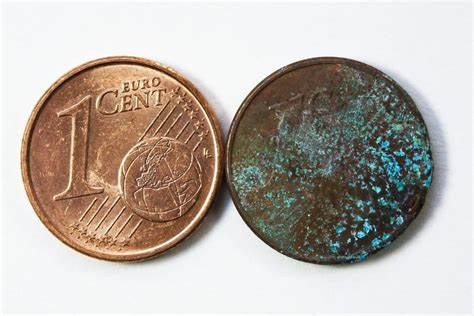
- Reviewed the real-world conditions coins experience in circulation: atmospheric exposure, contamination, storage collisions, and galvanic corrosion between dissimilar metals
- Catalogued the five dominant wear mechanisms (adhesive, abrasive, oxidative, contact fatigue, corrosive) and the physics behind each
- Traced the history of coin wear testing back to Charles Hatchett's 1803 accelerated wear rigs, through to modern tribometers
- Built a weighted scoring matrix ranking candidate coinage alloys against 15 criteria (wear resistance, corrosion resistance, cost, toxicity, counterfeiting resistance, and more) drawn from Royal Mint and US Treasury specifications
A single alloy choice has to satisfy over a dozen competing, often conflicting criteria simultaneously — the same multi-criteria trade-off structure used in any real material selection decision, just made vivid by an object everyone has in their pocket.
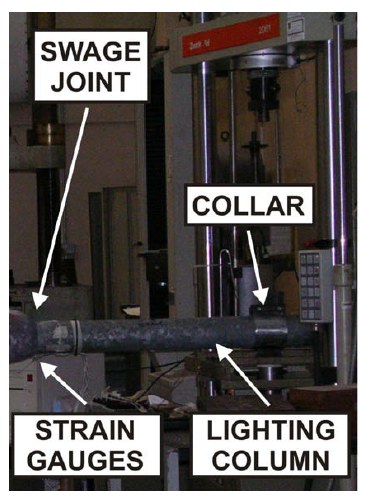
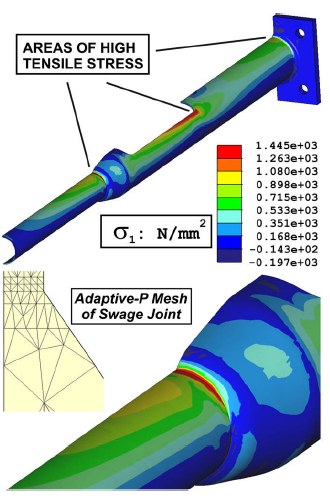
- Reviewed the fatigue failure mechanisms affecting welded and swaged steel/aluminium columns — dislocation glide, corrosion fatigue, thermomechanical fatigue — and how stress concentration, surface finish, and residual stress each degrade fatigue life
- Compared laboratory validation methods: cantilever bending fatigue tests, elastic FEA modelling, and corrosion-fatigue chambers — including where each method's predictions fall short of what standards require
- Selected and justified a lighting column material against formal British Standards (BS EN 40 series, BS EN 12767 impact survivability, BS EN 1461 corrosion protection), comparing steel, aluminium, and fibre-reinforced polymer composite options
Neither bending tests nor FEA alone are currently accurate enough to satisfy the relevant standards on their own — a genuinely useful, humbling finding: predictive tools have real, standards-defined limits, and knowing where those limits are is as important as knowing how to use the tools.
The two case studies together demonstrate that the same disciplined process — survey the failure literature, understand the physical mechanisms, then weigh candidate solutions against a real, external specification — scales from a trivial everyday object to safety-critical infrastructure. That's precisely the mindset needed when working against aerospace certification standards, where a material or design choice has to be justified against a specification, not just against what performs best in isolation.